
Three in 10 homes sold in the Mid-Atlantic region in February 2023 received over their original list price.
NEWS
What’s Going on at the Fed… And What Does it Mean for the Housing Market
The Fed raised interest rates again this week amidst persistently high inflation and banking instability.
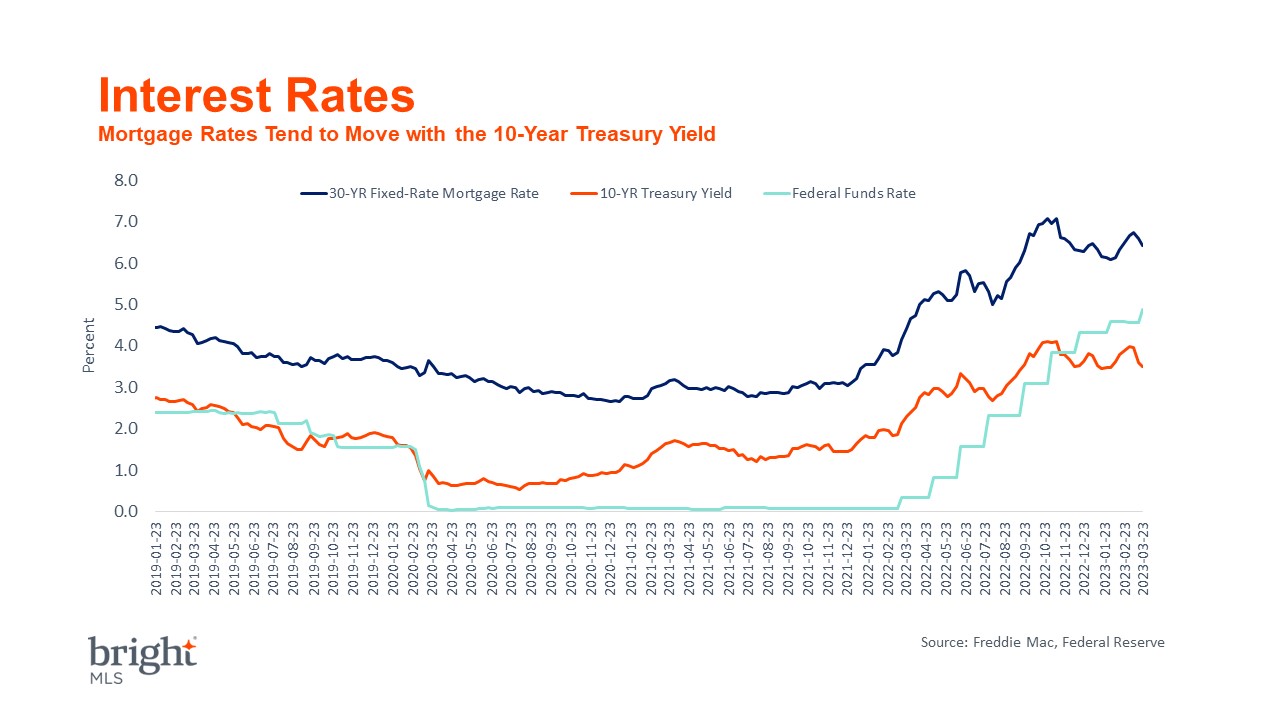
On Wednesday, the Federal Reserve announced a 25-basis point rate increase, the ninth rate hike in the past year, bringing the target federal funds rate to 4.75 – 5%. As they met this month, the Federal Reserve was between a rock and a hard place, battling conflicting goals of bringing inflation down and stabilizing uncertainty in the financial sector. Their decision to raise rates suggests the Fed believes the worst of the banking crisis is behind us, noting in its press release that the “U.S. banking system is sound and resilient.”
The rate hike this week also indicates that the Federal Reserve continues to view fighting inflation as its primary objective. Inflation was at 6% in February, and while inflation has declined for eight months in a row, it is still above the Fed’s target level. Focusing on the inflation fight, and not on the banking situation, could resonate with consumers who are more concerned about rising prices than they are about risks in the banking sector.
But consumers should also expect to see mortgage rates move higher. The recent bank failures provided a surprising reprieve for homebuyers in the form of lower mortgage rates earlier this month. After the Fed’s announcement, however, rates could increase. Watch the yield on the 10-year Treasury; the 30-year fixed rate mortgage rate tends to closely follow the yield on the 10-year Treasury. Treasury yields generally rise when investors feel more confident in the economy and when the recessionary risk declines.
Homebuyers have been watching rates closely, and if rates do go higher, buyers will see their purchasing power erode further. As an example, a half percentage point increase in mortgage rates increases the monthly payment of a typical homebuyer by more than $100. Elevated mortgage rates likely will lead to more softening in home prices. The national median home price declined year-over-year in February for the first time in more than a decade.
Even though higher rates could mean home prices could decline some, don’t expect prices to fall dramatically. Low inventory continues to limit buyers’ leverage and sellers still have the upper hand in most markets.
Stay informed about housing market conditions with Bright’s housing market reports and get a preview of future buyer activity by tracking the Bright MLS T3 Home Demand Index for the Philadelphia, Baltimore, and Washington, D.C. regions.

Dr. Lisa Sturtevant serves Bright MLS as the nation’s only MLS-focused economist. She leads research, reporting and insights from Bright’s comprehensive array of real estate data. In 2022, Bright’s over 100,000 subscribers facilitated $121B in real estate transactions through its system stretching across 6 states and the District of Columbia.
Exclusive Market Research & Analysis
For regular updates on the housing market, including weekly insights from Dr. Lisa, please visit BrightMLS.com/Research.
Recent articles
In the ramp-up to the spring market, higher mortgage rates led to a bumpy rebound across the Mid-Atlantic.
Back to Top