
According to Bright’s latest subscriber survey results, the region is a hotspot for first-time buyers.
NEWS
The New Normal for Mortgage Rates
How to help buyers and sellers navigate a challenging fall market
The average rate on a 30-year fixed rate mortgage crossed the 7% threshold this month, and there are signs that rates may move even higher in the coming weeks. What does this mean for home sales this fall, and how can buyers and sellers best position themselves to be successful in a challenging housing market?
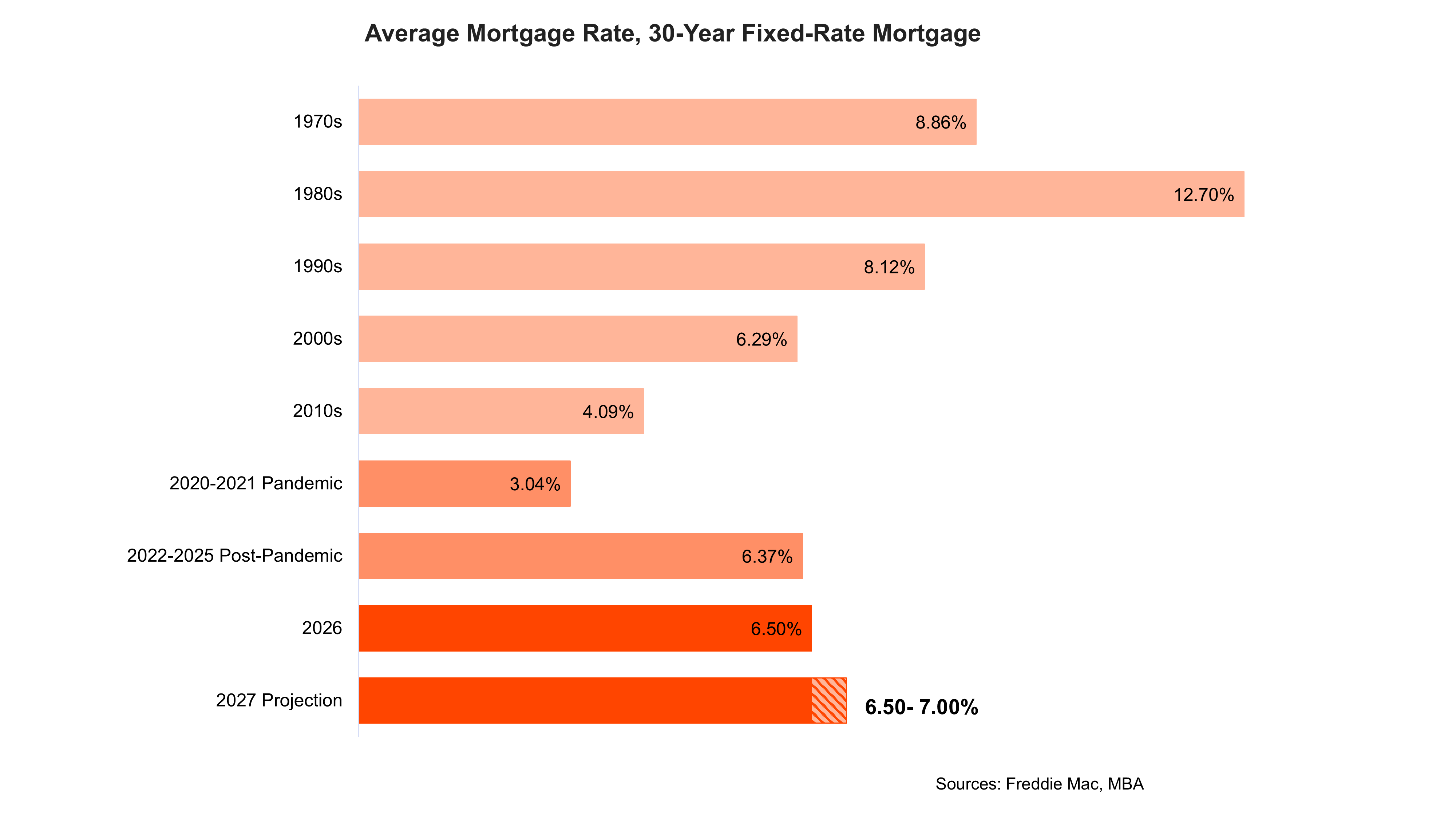
It is a new era for mortgage rates
During the pandemic, mortgage rates fell to their lowest levels in history. During the post-pandemic period, rates had settled into the mid-6% range. While rates fell briefly below 6% this February, U.S. military engagement in the Middle East reversed the downward trend in rates, reigniting inflation fears in the bond market. Mortgage rates are now 100 basis points higher than they were in February.
Today’s rates are obviously higher than they were during the pandemic, but they are also relatively high compared to the early 2000s. The record-high Federal debt, ongoing geopolitical conflicts, and economic uncertainty have created a new floor for 10-year Treasury yields, which has set a new baseline for mortgage rates.
Home prices are not going to crash
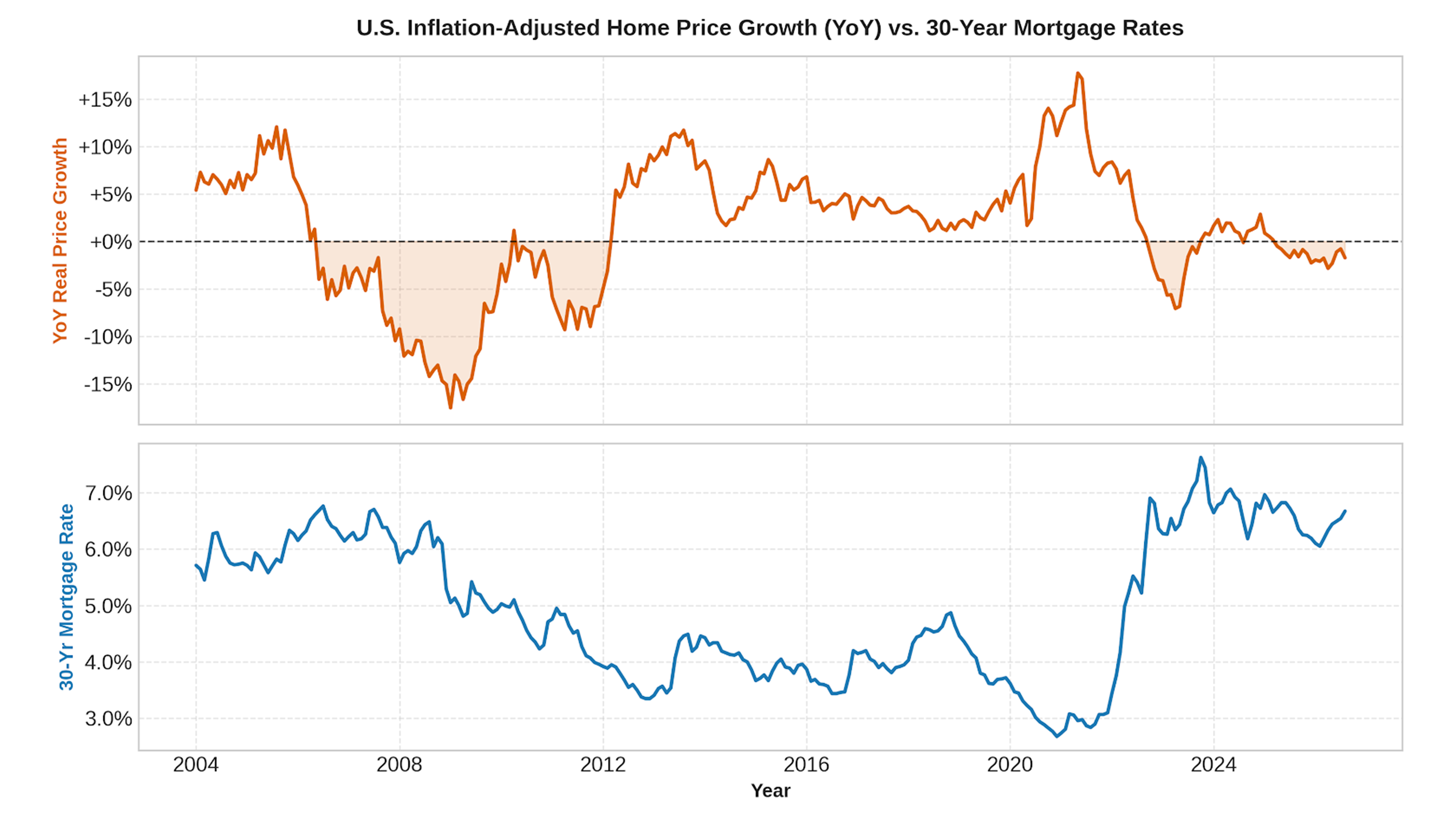
Nominal home prices (i.e. “sticker prices”) are still rising in many markets even as inflation-adjusted (i.e. real) home values have actually been cooling off. Homebuyers are not finding the market more affordable, but rather the trend of home price growth outpacing inflation has clearly ended.
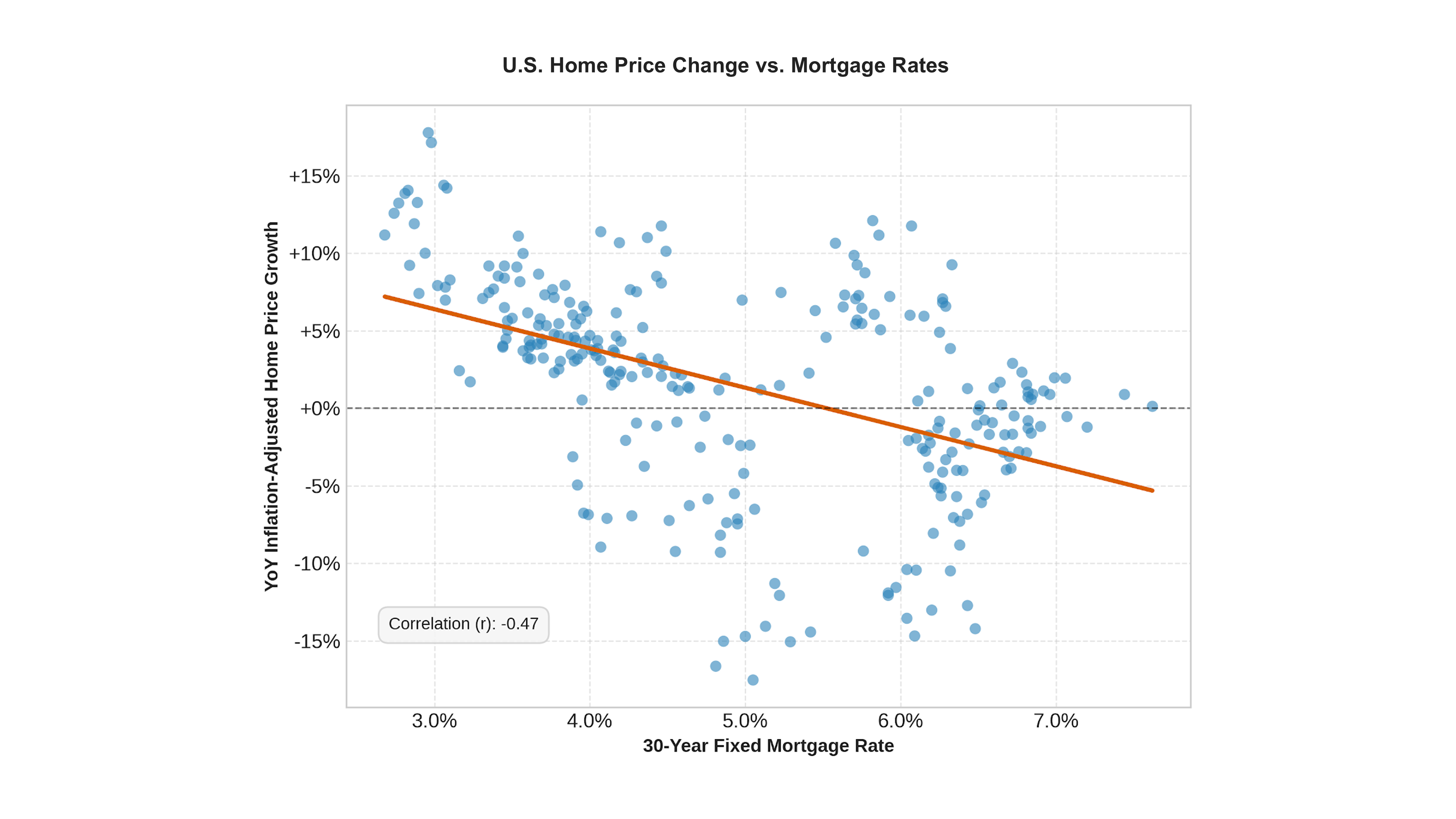
As rates rise, there have been growing concerns that higher rates will lead to significant home price declines. Looking at the data over the past two decades, we can see a clear negative correlation between mortgage rates and home price growth, which means when rates rise, real home prices tend to grow more slowly or even decline year-over-year.
However, there are other factors at play in the current market. Rate lock is creating a supply floor, which will keep inventory from exploding and prices from dropping significantly. Timing also matters. As data from the past 20 years shows, it can take six to nine months for a sustained increase in mortgage rates to dampen home price appreciation.
Affordability remains a major constraint
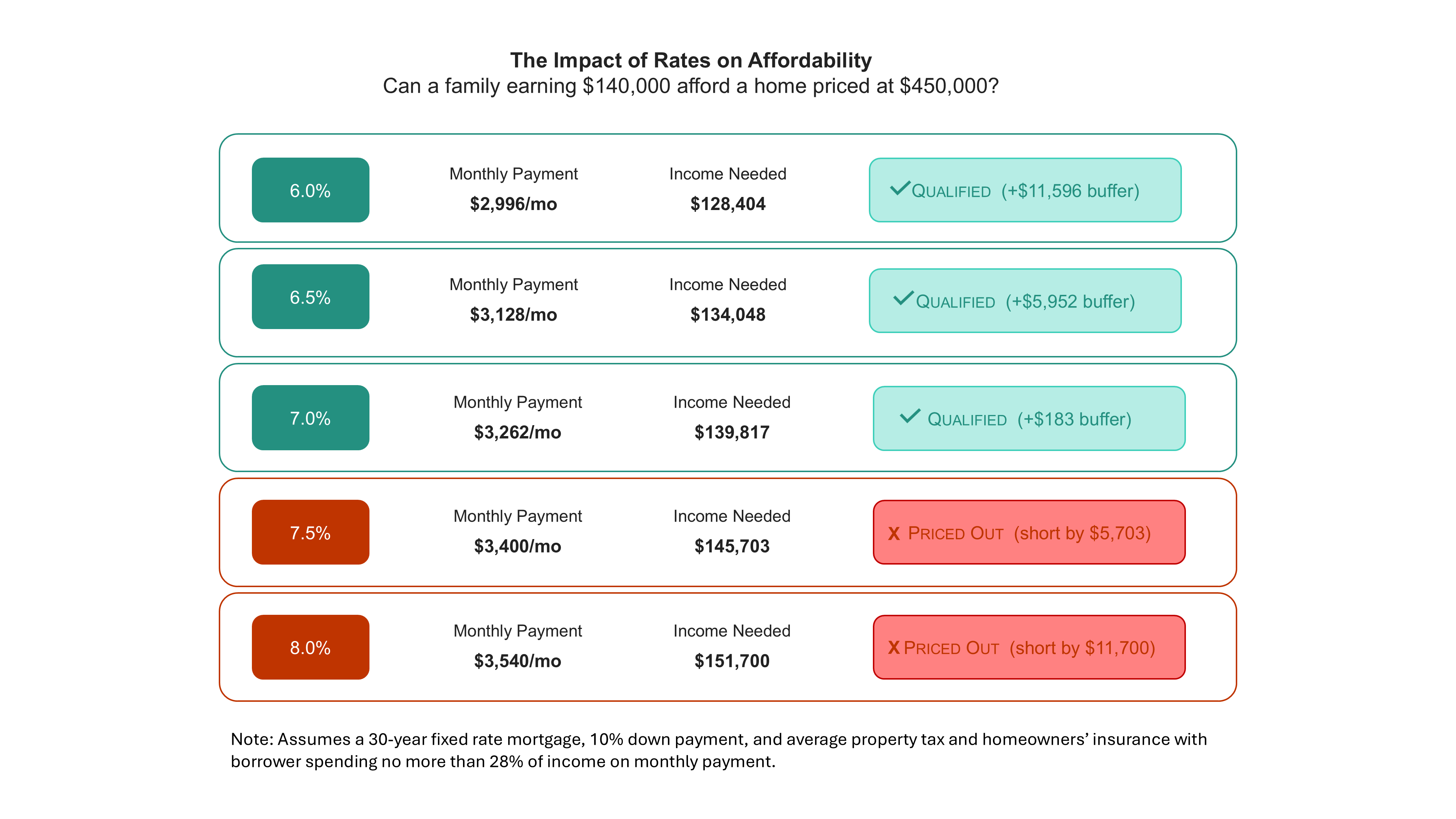
With nominal home prices at near record highs in many markets, the uptick in mortgage rates is causing more prospective homebuyers to hit an affordability ceiling. For every 50-basis-point increase in mortgage rates, the payment on the median-priced home increases by more than $130. Over 10 years, that amounts to an additional $16,000 to the homebuyer.
For some buyers, the numbers simply don’t pencil at a higher interest rate. A family earning $140,000 can qualify to purchase the median-priced home at a 7.0% interest rate, assuming a 10% down payment and average property tax and homeowners’ insurance costs. However, that home becomes unattainable to that family at a 7.5% rate.
A playbook for working with buyers and sellers
In this challenging housing market, buyers and sellers are feeling anxious. More than ever, they want to work with a real estate professional who can help guide them through this new mortgage rate environment and feel confident in their homebuying or selling decision.
For Sellers: Setting Expectations in a High-Rate Environment
- Price for today, not last year: Remind sellers that with mortgage rates at or above 7%, buyers are not able to stretch their budgets as much as they used to. Overpricing leads to stagnant listings, eventual price cuts, and less seller leverage.
- Offer incentives over cuts: Encourage sellers to offer buyer rate buydowns rather than a flat concession on price. A buydown gives the buyer a lower monthly payment, which can be attractive with rates at 7%.
For Buyers: Finding Opportunity Amid High Rates
- Less competition, more leverage: High rates filter out casual buyers. Serious buyers who remain in the market have more room to negotiate seller concessions, repair credits, and contingency terms.
- Focus on payment, not price: Buyers should ask for concessions from sellers, particularly rate buydowns, which can lower the monthly payment more than a modest price discount.
Exclusive Market Research & Analysis
Get the latest research and studies from Bright at BrightMLS.com/Research.
Recent articles
5 charts that show how the market is shifting
Back to Top