
Get the latest on the housing market from Bright’s economists! Attend an upcoming webinar or watch a recording of the most recent presentation.
NEWS
Even Steep Price Cuts May Not Generate Buyer Traffic
In this uncertain market, dropping the asking price does not guarantee more showings the following week.
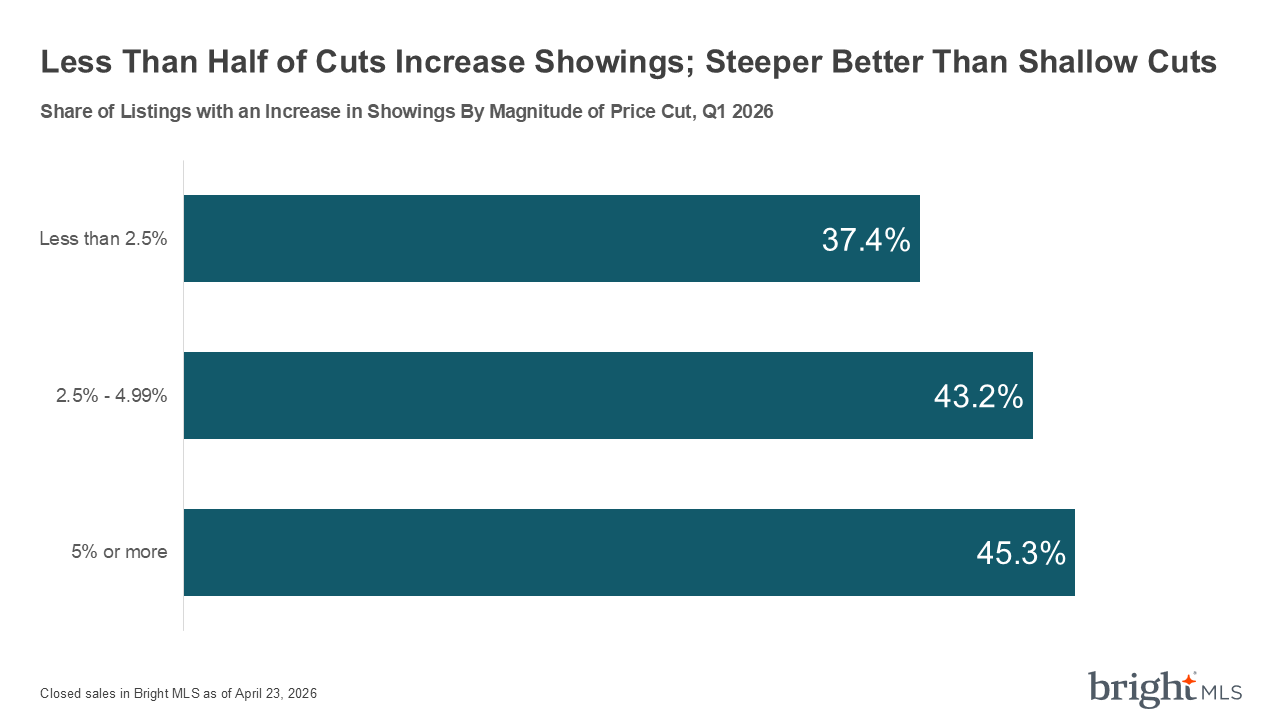
In the Mid-Atlantic's shifting market, price cuts are more common today than a year ago. However, sellers attempting to attract buyer interest may be disappointed in the reaction to price cuts. In the first quarter of 2026, only 41.2% of price cuts led to more showings in the following week.
The bigger the price drop, the more likely a cut increased buyer traffic. However, even price cuts of 5% or more led to an uptick in weekly showings less than half the time. While price is part of the equation, buyers also consider factors like location, floor plan, and other characteristics when deciding which homes to view. Price cuts don’t necessarily move the needle enough to guarantee more interest. Inventory has risen so homes already on the market are also competing against fresh listings that may garner more attention.
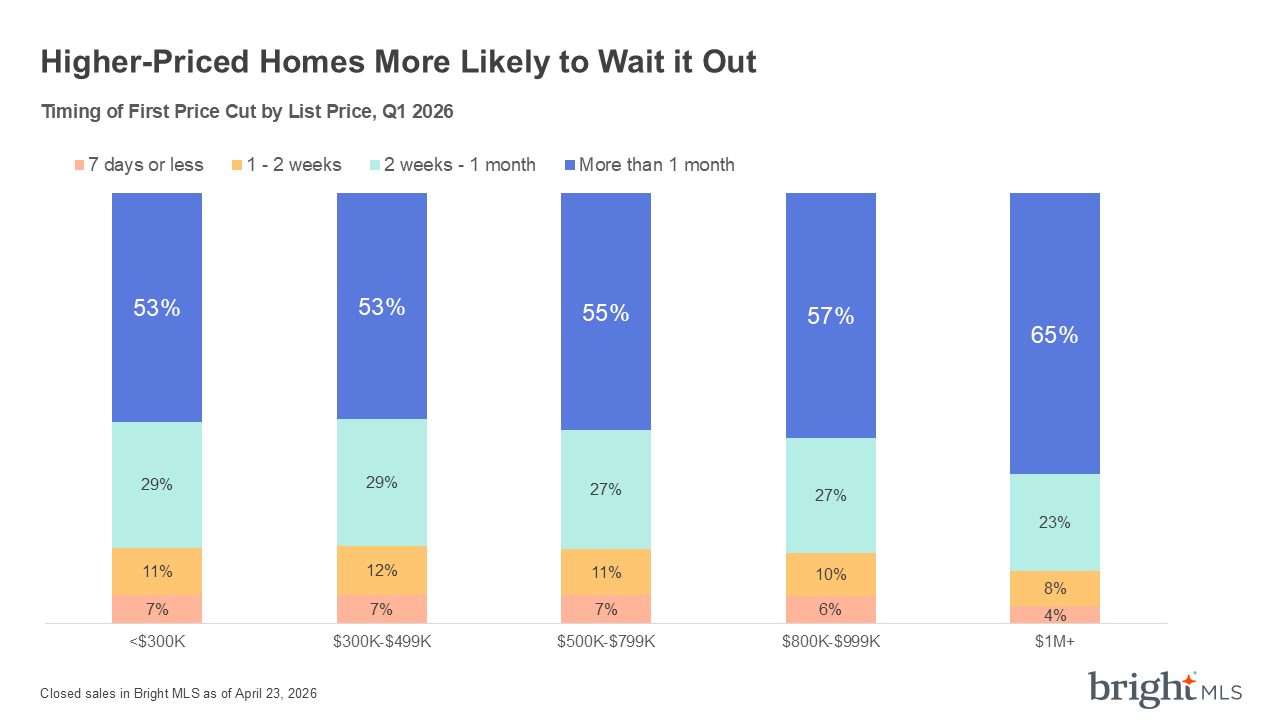
Sellers are patient when determining when to cut their list price for the first time. In the first quarter of 2026, more than half (54.2%) of homes that eventually cut their asking price were on the market more than a month before the seller dropped the asking price. Just 6.4% of sellers who made a cut adjusted the list price within seven days.
Higher-priced home sellers are inclined to wait the longest. Nearly two-thirds (65.3%) of sellers of homes priced at $1 million or more waited more than a month to cut their asking price. Sellers of higher-priced homes, particularly luxury homes, understand they have a limited clientele. The obstacle could be more about waiting for the right buyer than it is about the seller’s overestimated valuation of the home. Bright finds continued resiliency in the luxury market compared to the overall market. Further, 26.3% of high-end sellers who make a cut don’t touch the price until the third month compared to 13.6% of all first-time price cuts that happen after three months on the market.
Typically, a home will have three or four showings before its first price cut. Some sellers who don’t see any showings are persuaded to make a timelier cut. Homes with no showings are three times more likely to cut within the first week, with 18.2% of homes adjusting the price in seven days.
Real estate professionals need to prepare their sellers for the reality of price cuts in today’s market. Adjusting a home’s price can garner interest from some buyers, especially if the cut is deep; however, factors like location, floor plans, and other home characteristics don’t change when the list price drops. Homes are spending more time on the market now than a year ago, and sellers may have to be more patient. Furthermore, pricing appropriately at the outset, with recommendations from a local expert, is the best way for sellers to be successful.
Exclusive Market Research & Analysis
Get the latest research and studies from Bright at BrightMLS.com/Research.
Recent articles
Sellers of lower-priced homes need the most support for better pricing.
Back to Top